Are Resin Bound Driveways Permeable? The Facts
A resin driveway can look beautifully smooth and clean while still allowing rainwater to pass through it. But when homeowners ask, “are resin bound driveways permeable?”, the honest answer is: they can be. True permeability depends on the entire construction beneath the surface, not simply the resin and aggregate you see from the kerb.
For homes across Nottinghamshire, where heavy downpours can quickly leave standing water on an ageing driveway, this distinction matters. A properly specified resin bound system can help manage surface water, reduce puddles and create an attractive, durable entrance to the property. A poorly planned installation, however, may not provide the drainage performance expected.
Are resin bound driveways permeable?
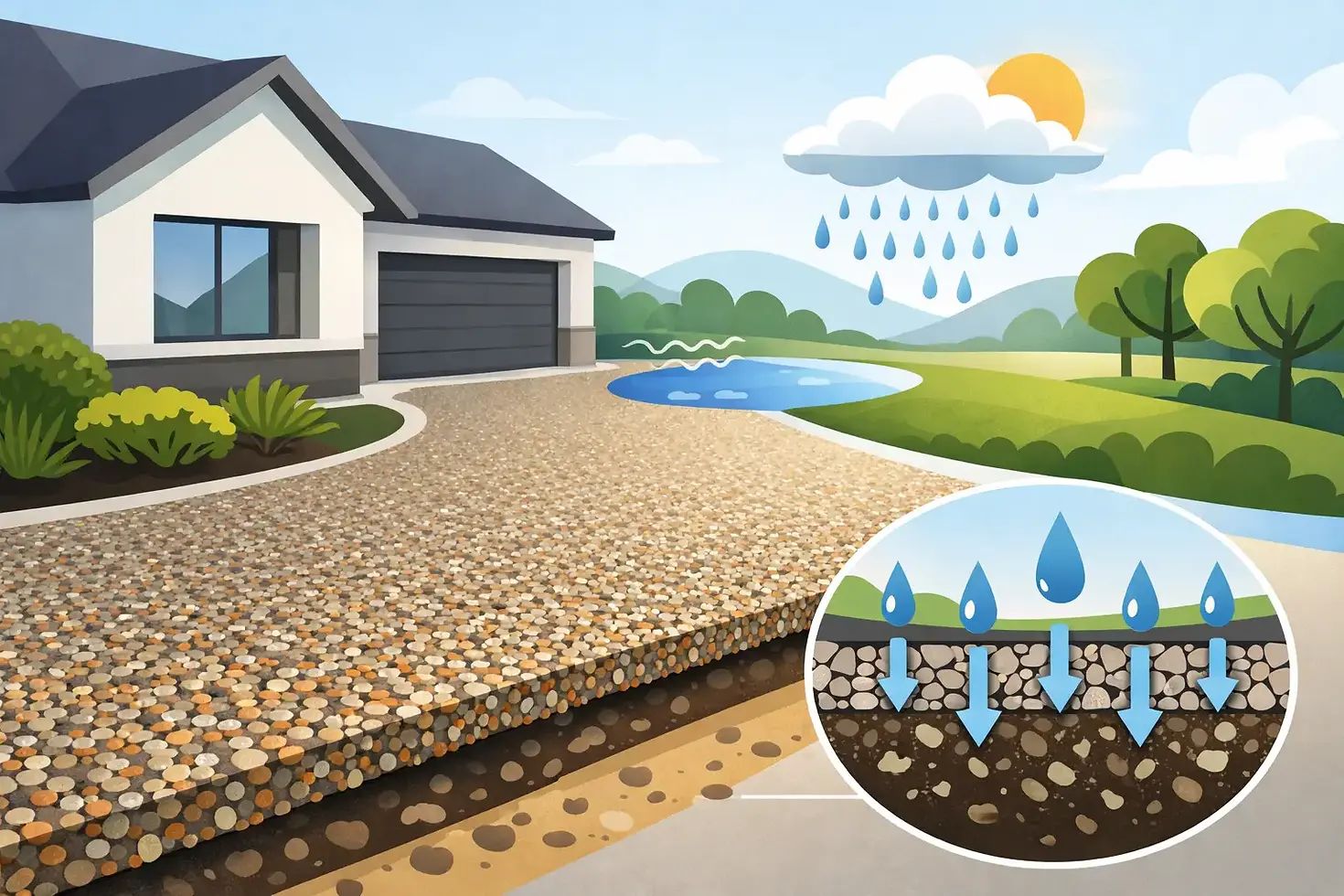
A correctly installed resin bound driveway is permeable. It is made by thoroughly mixing kiln-dried aggregate with a specialist resin before laying it as one even layer. Small gaps remain between the stones, allowing water to drain down through the finished surface rather than sitting on top.
This is one of the key attractions of resin bound aggregate. Rainwater can pass through the surface and into a suitable permeable base below, helping to minimise run-off. It also means the driveway can retain its neat appearance in wet weather, without the large puddles that sometimes form on solid concrete or tarmac surfaces.
However, resin bound does not automatically mean that every resin driveway is fully permeable. If it is laid over an impermeable concrete base without appropriate drainage measures, water may pass through the resin but then be stopped beneath it. The surface itself remains porous, but the overall driveway construction does not allow water to soak away effectively.
Resin bound and resin bonded are not the same
The terms resin bound and resin bonded are sometimes used interchangeably, but they describe different products with very different drainage properties.
With resin bound surfacing, aggregate and resin are mixed together before application. This creates the smooth, stone-filled surface associated with modern resin driveways and leaves controlled voids for water to drain through.
Resin bonded surfacing involves applying resin to a base and scattering loose aggregate over the top. It has a more textured finish, but the layer of resin beneath the stones generally creates a sealed surface. It is therefore not normally considered permeable.
If drainage is a priority for your driveway, make sure you are discussing a resin bound system rather than resin bonded gravel. The appearance can be similar from a distance, but the installation method and performance are not.
The base determines how well a resin driveway drains
A permeable resin bound surface needs a suitable foundation. Water must be able to move through the aggregate and continue into the ground or through a designed drainage system. The best base will depend on the existing driveway, soil conditions, levels and the amount of vehicle traffic expected.
A new permeable build-up commonly uses an open-graded stone sub-base. Unlike dense materials containing fine particles, open-graded stone has spaces between the pieces of aggregate. These gaps temporarily hold rainwater and allow it to filter into the ground below where conditions allow.
On some properties, particularly where ground conditions are less free-draining, the driveway may need a carefully designed system to direct or store water rather than relying on natural soakaway alone. This could involve drainage channels, soakaways or attenuation within the sub-base. The aim is to manage water responsibly without sending it across the pavement, towards the house or onto a neighbouring property.
An existing sound tarmac base can sometimes be suitable for resin bound surfacing, although it may not create a fully permeable construction. In these cases, falls and drainage details become especially important. A professional survey should establish whether the base is stable, whether water currently pools and whether there is sufficient depth for a new permeable build-up.
Ground conditions cannot be guessed
Clay soils are common in parts of Nottinghamshire and can drain more slowly than sandy or gravelly ground. A surface may allow water through quickly, yet the soil beneath may not absorb it at the same rate during prolonged rain.
That does not rule out a resin bound driveway. It simply means the design should reflect the site. Getting levels, edging and drainage right at the start is far more effective than trying to solve standing water after the driveway is finished.
Permeability, SuDS and driveway planning
Sustainable Drainage Systems, often shortened to SuDS, are designed to manage rainwater close to where it falls. Permeable driveways are one way to support this approach, as they can reduce the volume and speed of water running into road drains.
For front gardens, planning rules can be relevant when creating or replacing a driveway larger than five square metres. In general, planning permission may be required if an impermeable surface directs rainwater onto the road and no suitable drainage provision is included. Permeable materials, or designs that drain water to a lawn, border or soakaway within the property, can often avoid this issue.
Every property is different, so it is sensible to check the current requirements with the local planning authority if there is any uncertainty. Listed buildings, properties in conservation areas and projects involving changes to access or drainage may have additional considerations.
A good driveway design should not treat SuDS as a box-ticking exercise. It should also protect the property. Water should fall away from the house, thresholds should remain secure, and drainage details should work with the shape of the garden and surrounding levels.
Why homeowners choose permeable resin bound surfaces
Drainage is a practical benefit, but it is not the only reason resin bound driveways are popular. The material offers a refined, contemporary finish that works well with both traditional and modern Nottinghamshire homes.
There is a wide choice of natural aggregate colours, from warm golden blends to greys, silvers and deeper tones. Borders can be used to frame the driveway, complement brickwork or pick out a path to the front door. Because the finish is bound together, there are no loose stones to rake back into place after parking.
The surface is also generally comfortable underfoot and suitable for driveways, paths and garden areas when installed to the correct specification. Its smooth finish can make it a practical choice for families, visitors and everyday access, while its drainage performance can help keep entrances tidier in wet weather.
Low maintenance is another advantage. Resin bound aggregate does not need regular sealing, and it is easier to keep clean than loose gravel. Occasional sweeping and gentle cleaning will remove leaves, soil and everyday debris. Keeping the surface clear is worthwhile because blocked voids can gradually reduce how freely water drains.
What can affect performance over time?
Even a well-laid resin driveway needs sensible care. Mud, moss, leaf mulch and fine debris can settle into the surface, particularly under trees or in shaded areas. Regular sweeping and a gentle wash can help keep the pores open. Pressure washing should be done carefully and at an appropriate distance, as aggressive cleaning can damage the aggregate or resin.
Cracking and movement are more often linked to a weak or unsuitable base than to the resin layer itself. Driveways must be built to carry the expected load. A surface used by family cars needs a different foundation from a path, and areas used by heavier vehicles need further consideration.
Oil spills should be dealt with promptly, using cleaning products suitable for resin bound surfacing. Avoid harsh solvents and do not use de-icing salt indiscriminately, as it can affect the appearance and long-term condition of the surface.
The quality of the aggregate and resin also matters. UV-stable resin helps protect the finished colour from discolouration, while properly dried aggregate supports a strong bond. These details may not be obvious once the driveway is complete, but they influence how well it performs year after year.
Choosing the right driveway for your home
Resin bound aggregate is an excellent option when you want a smart, low-maintenance driveway with the potential for effective drainage. It is particularly well suited to homeowners replacing loose gravel, tired block paving or a cracked concrete drive, provided the base and drainage are designed as part of the project.
It may not be the only suitable choice. Block paving, tarmac and concrete can all be effective driveway materials when specified properly, and each has different strengths in terms of appearance, budget, maintenance and load-bearing performance. The right answer depends on your property rather than a one-size-fits-all material choice.
Before choosing a resin bound driveway, ask how water will travel through the surface, what sits beneath it, where it will go during heavy rain and how the finished levels will relate to your home. At SH Gardens & Driveways, those practical details are considered alongside colour, borders and the overall look, so the finished space feels as dependable as it looks.


Comments